How Search Engines Keep Getting it Wrong
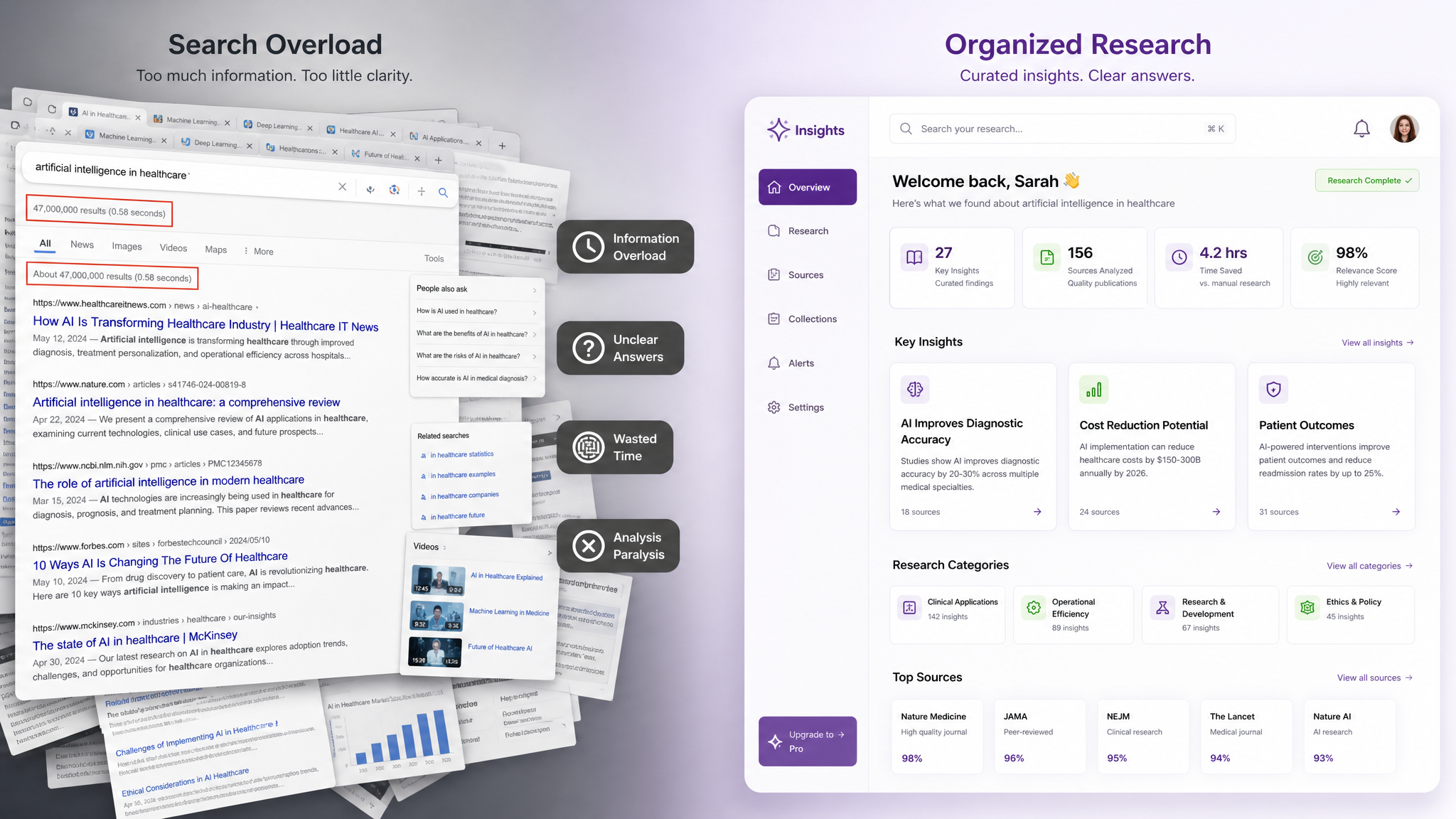
Every search engine operates under the same outdated premise, that users want more results, faster. Run a search on your favorite search engine and they proudly display their result stats, such as 488,000,000 results in .7 seconds.
Really? Who needs that many results? And given that it would take more than a lifetime to review that list, does it really matter that they were delivered in .7 seconds?
This design approach represents the typical technology-oriented design thinking prevalent in the tech community. A more user-centered design approach would recognize the needs of the users rather than the performance of the technology as the driving force in the solution design.
Users don't want more results faster. They want more relevant results. The search engines are solving the wrong problem very well. A better search engine design would involve culling the results list to a manageable few that are much more useful to the user.
But search engine designers have created a status quo that almost prevents them from seeing search in a different way. Search engine design needs to evolve into a more user-centric solution. Think of the many frustrations you've experienced while using a search engine for a more complex search. Do you ever get past the 3rd page of results? So why do you need 30 million other pages? Do you think it should be easier to keep track of the pages you think might be worth reading, again, later?
There are a number of user difficulties that could be addressed with a better, user-oriented design. That's exactly what Iterative Search does — it puts the researcher first, not the technology.